

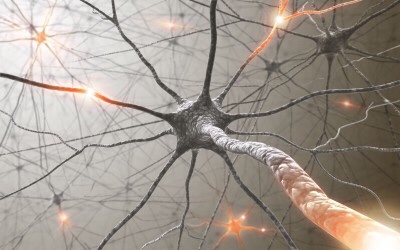
Three patients in an intensive care unit are examined by the resident doctor. One patient has brain damage from a stroke, another had a heart attack that severely damaged his heart muscle, and the third has a severely damaged liver (a gland) from a crushing injury in a car accident. All three patients have stabilized and will survive, but only one will have full functional recovery through regeneration. Which one and why?
Physiological healing is the restoration of damaged living tissue to normal function. It is determined as the process by which the cells in the body regenerate and repair to reduce the size of a damaged or necrotic area. Healing may incorporate both the removal of necrotic tissue, and the replacement of tissue. The replacement can happen in two ways: by regeneration in which the necrotic cells are replaced by the same tissue as was originally there and by repair in which injured tissue is replaced with scar tissue. Healing may happen by repair in the case of injury to cells that are unable to regenerate, also by damage to the collagen network or by its total collapse causing healing to take place by repair. In order for an injury to be healed by regeneration, the cell type that was destroyed must be able to replicate. Most cells have this ability, although it is believed that cardiac muscle cells and neurons are two important exceptions.
People affected by stroke may become confused, self-centred, uncooperative and irritable, and may have rapid changes in mood. “The right hemisphere of the brain controls the movement of the left side of the body so stroke in the right hemisphere often causes paralysis in the left side of the body. This is known as left hemiplegia”. Survivors of right-hemisphere strokes may also have problems with their spatial and perceptual abilities. This may cause them to misjudge distances or be unable to guide their hands to pick up an object, button a shirt or tie their shoes. They may even be unable to tell right side up from upside-down when trying to read. The left hemisphere of the brain controls the movement of the right side of the body. It also controls speech and language abilities for most people. “A left-hemisphere stroke often causes paralysis of the right side of the body. This is known as right hemiplegia. Someone who has had a left-hemisphere stroke may also develop aphasia. Aphasia is a catch all term used to describe a wide range of speech and language problems. These problems can be highly specific, affecting only one part of the patient’s ability to communicate, such as the ability to move their speech-related muscles to talk properly.” The same patient may be completely unimpaired when it comes to writing, reading or understanding speech. Other effects of a stroke are trouble with eye movements, hearing, speech, swallowing, balance problems such as dizziness, nausea, vomiting, and last but not least a strong state of depression. The way in which the person affected by stroke reacts to these changes will affect their personality, and may cause changes in control of emotions and behaviour. They may not be able to adjust easily to anything new and may become anxious, annoyed or tearful over seemingly small matters. In contrast to a stroke effects vary, is long-term and wont regenerate but might undergo a healing process.
If the heart muscle does not have enough blood it dies and a heart attack occurs. A heart attack usually happens when a blood clot develops in one of the blood vessels that lead to the heart muscle. The clot, if it is big enough, can stop the supply of blood to the heart. Blood supply to the heart can also be undermined if the artery suddenly narrows, as in a spasm. When patients suffer a heart attack, scar tissue develops, resulting in a decrease in heart contractility its ability to compress and force blood through its chambers. Since heart cells can’t repair themselves, this damage is irreversible and eventually results in heart failure. When asking the question, Can heart muscle regenerate after being severely damaged? Through research, studies have proved that skeletal muscle is safe for implantation into the heart muscle. A variety of cardiac imaging techniques showed that the cells survived and implanted into the heart tissue. Results of this study resulted in recommendations for isolated FDA clinical trials of the use of skeletal muscle in the heart.
The liver is a unique organ. It is the only organ in the body that is able to regenerate that is completely repairing the damage. With most organs, such as the heart, the damaged tissue is replaced with scar, like on the skin. The liver, however, is able to replace damaged tissue with new cells. The long-term complications of liver disease occur when regeneration is either incomplete or prevented by progressive development of scar tissue within the liver. This occurs when the damaging agent such as a virus, a drug, alcohol, etc., continues to attack the liver and prevents complete regeneration. Once scar tissue has developed it is very difficult to reverse that process. Severe scarring of the liver is the condition known as cirrhosis. The development of cirrhosis indicates late stage liver disease and is usually followed by the onset of complications. However, if no other complications arise, the patient’s liver will repair completely, and a liver biopsy after 30 days will appear completely normal with no signs of damage and no scar.
In contrast to the regeneration scenario; the patient with the severely damaged liver has a higher chance of healing through the process of regeneration.
Bibliography
http://www.medicalnewstoday.com/articles/151444.php
http://www.sciencedaily.com/releases/2008/06/080622224433.htm
brainfoundation.org.au/a-z-of-disorders/107-stroke
Wikipedia.com

 LIFE’S TEA